Menu
- LANDLORDS WANTED – REFERENCED TENANTS WAITING!
Are Victorian Houses A Good Investment?
Table of Contents
Are Victorian houses a good property investment? In the UK, Victorian houses are generally good property investments, especially for capital appreciation, their sought-after character, and home layout.
However, with all property types, there are potential drawbacks. To learn more about the pros and cons of Victorian houses, how they compare to new builds, and what to consider before investing, continue reading.
What is a Victorian House?
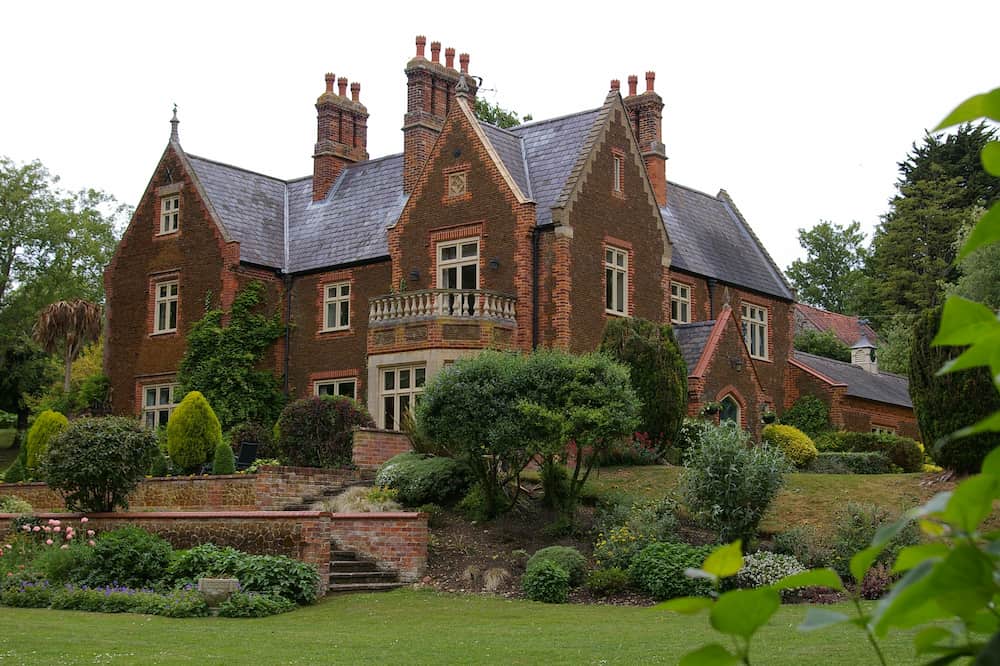
A Victorian house is a home built during the reign of Queen Victoria, from 1837 to 1901. The Queen’s reign spanned over 60 years, meaning Victorian homes don’t have a single look but rather several styles.
Typically, Victorian houses feature a terrace layout and original features — two common factors that make them so popular. There are currently millions of Victorian properties across the country, often connected in rows known as terraced houses, which helped house the growing population and save space for factory workers.
How to Spot a Victorian House
You can easily spot a Victorian house from the street by looking for a few key features:
- Red brick walls or stones
- Steep roofs in a triangular shape
- Coloured stained glass in the front door or windows
- Bay windows that stick out from the front
- Wooden trims around the porch or roof lines
Internally, Victorian homes were built to impress and keep out the cold:
- High ceilings and spacious rooms
- Fireplaces in most rooms
- Patterned floor tiles in the hallway or throughout
- Narrow, steep staircases to upper levels
- Skinny hallways with different rooms coming off to the side
You can tell Victorian homes apart from other houses due to their distinct features, which are seen in most towns in the UK.
Victorian House Property Value
According to Rightmove, Victorian houses are currently the most sought-after period property style.
Recent data from Hamptons Estate Agents revealed…
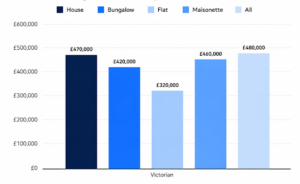
The average price of a Victorian home over the last three years:
- House – £488,420
- Bungalow – £440,500
- Maisonette – £469,970
- Flat – £425,520
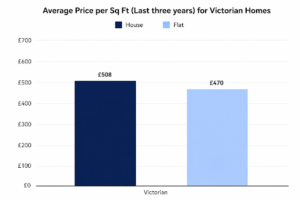
The average price per sqft over the last three years:
- House – £508
- Flat – £470
The UK House Price Index for April 2026 puts the average UK property at £270,000, while a Victorian property averages £488,420. This shows that Victorian homes are valued well above the UK average, and proves their desirability.
Potential Returns of Investing in a Victorian House
Victorian houses can offer strong returns for investors, as they often hold their appeal and can attract steady demand from buyers and renters.
To calculate the rental yield of a Victorian house, you must divide annual income by the property price and multiply by 100.
Let’s look at an example of potential returns:
The house price is £488,420 (based on the average price of a Victorian house), and monthly rent is £2,000.
- Calculate annual income (£2,000 x 12 months = £24,000)
- Calculate yield (£24,000 ÷ £488,420) x 100
This provides a gross rental yield of 4.91%.
Zoopla shared that the average gross rental yield in the UK is currently 5.8%, showing 4.91% (based on our example) offers a stable return close to that of our national average.
However, it’s important to note that rental yields can widely differ for Victorian houses depending on location.
A Victorian house in London will typically command a lower yield due to higher purchase prices, whereas similar period homes in northern areas, such as Liverpool, offer much higher yield potential due to lower initial entry costs.
Pros vs Cons of Investing in a Victorian House
There are pros and cons to every type of property investment, even including Victorian houses, which are deemed incredibly popular.
| Property Type | Average Price |
|---|---|
| House | £488,420 |
| Bungalow | £440,500 |
| Maisonette | £469,970 |
| Flat | £425,520 |
Please note that pros and cons differ between investors. What may pose as a drawback for you may not be an issue to someone else. Generally, the pros of investing in a Victorian house outweigh the potential cons, which are all pretty manageable.
Is a Victorian House Better than a New Build?
Whether a Victorian house is better than a new build depends on your overall investment goals, budget, and the type of tenants you want to attract.
You will likely prefer investing in a Victorian house if:
✔️You want a property with character and period features to stand out in the rental market
✔️You are happy to budget for ongoing maintenance and occasional repairs
✔️You want to manage an older property instead of a new one
✔️You have the capital for high upfront costs
✔️You value the uniqueness of period homes over modern designs
✔️You want to renovate in the future to add value
✔️You are targeting tenants who want large rooms, high ceilings, and traditional architecture
✔️You plan to invest for long-term capital growth rather than immediate low-maintenance returns
However, you will likely prefer investing in a new build:
✔️You want a property that requires minimal maintenance to begin with
✔️You want to manage a newer property instead of an old one
✔️You don’t want many repair costs or unpredictable expenses
✔️You want to attract tenants who prioritise modern designs
✔️You want better energy efficiency
✔️You want to invest in a property with modern layouts and open-plan living spaces
✔️You want a property that meets current building regulations and safety standards
✔️You want lower ongoing management and convenience
Find Your Dream Victorian Property Investment
At Peninsular Property, we work closely with investors in the UK to help find the right property to invest in.
Our specialist team have experience with different property types, including period homes from the Victorian era. If you require assistance in finding a Victorian home investment or need expert property management, we can help.
To find the perfect Victorian property to invest in, please contact our friendly team today.
FAQs:
Is it worth buying a Victorian house as an investor?
Yes, it’s worth buying a Victorian house as a property investor. They offer strong, long-term capital growth, high tenant appeal, and opportunities to add value through the likes of renovation or modernisation.
Are Victorian houses a good buy-to-let investment?
Yes, Victorian houses have the potential to be a great buy-to-let investment if purchased in the right location and at the right price. Typically, Victorian homes attract tenants seeking more space and character rather than modern new builds.
How long will a Victorian house last?
A well-maintained Victorian property can remain a valuable investment for years, with most already lasting 100+ years and still performing incredibly well.
Are Victorian houses hard to sell?
No, Victorian houses are not usually difficult to sell. When you decide it’s time to sell your property investment, you probably won’t have much trouble in finding a buyer.

Joe is the founder of Peninsular Property and has worked in the industry since 2005. Joe has negotiated on over 9 million pounds worth of property purchases and managed over 1000 properties for clients all over the world. Joe is a landlord himself with a varied property portfolio so is ideally placed to advise clients on their property purchases and investments.